


Find the cause
Separate tank, pipe, pump and field issues.
Melbourne Septic is the #1 septic in Melbourne, FL. We handle septic pumping, septic cleaning, septic inspections, tank repairs, septic installation or replacement, and drain field services, servicing the greater Melbourne area.
We have over 16 years of experience handling installation, oversight, and business development. It's important to start with the cause, then choose the right service. Bedrooms and floor area guide Florida sizing. Brevard groundwater, sewer access and Lagoon requirements shape the right plan. Expected service life depends on the installed product, site conditions and maintenance.
Separate tank, pipe, pump and field issues.
Know what your estimate includes.
Plan around the actual installed system.
Compare starting prices with the full proposal.
Confirm soils, sewer access and permits early.
Keep records and a practical care schedule.
Start with the service that matches your need. If you are unsure, describe the symptoms.
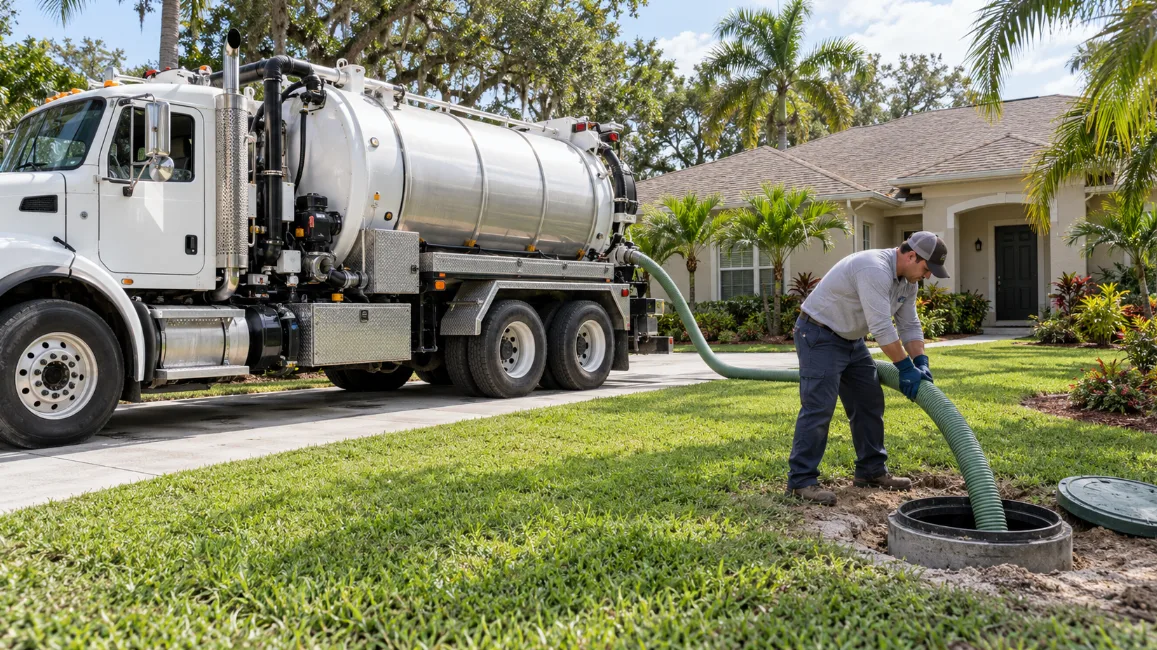
Routine care, a recurring backup or a new system: each starts with a clear scope and the property’s actual needs.
Remove built-up waste. Confirm tank capacity, lid access and the last service date.
Explore Septic ServiceRemove residue after pumping. Ask whether wash-down and deeper cleaning are included.
Explore Septic ServiceCheck accessible components, records and symptoms before buying, maintaining or repairing a system.
Explore Septic ServiceAssess lids, baffles, filters, connections and pumps before deciding whether replacement is needed.
Explore Septic ServicePlan tank capacity, treatment, soil and the field together. Check sewer availability first.
Explore Septic ServiceDescribe the backup and request urgent service. Availability is confirmed separately.
Explore Septic Service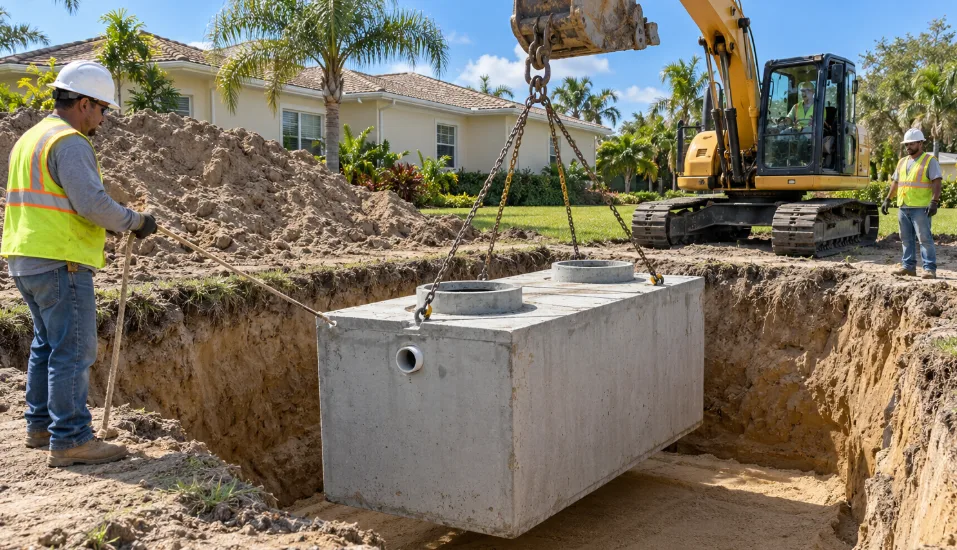
A tank can be sound while the field struggles. Review distribution, soil and groundwater before deciding on repair or replacement.
Separate damaged distribution parts from soil and groundwater problems before choosing repairs.
Explore Drain Field ServiceInvestigate wet spots, odors and recurring backups using records, distribution checks and site conditions.
Explore Drain Field ServicePlan a suitable treatment area when repair is not enough. Review the tank and sewer options too.
Explore Drain Field ServiceStart with the floor plan, system record, sewer availability and site conditions before choosing a tank or replacement field.
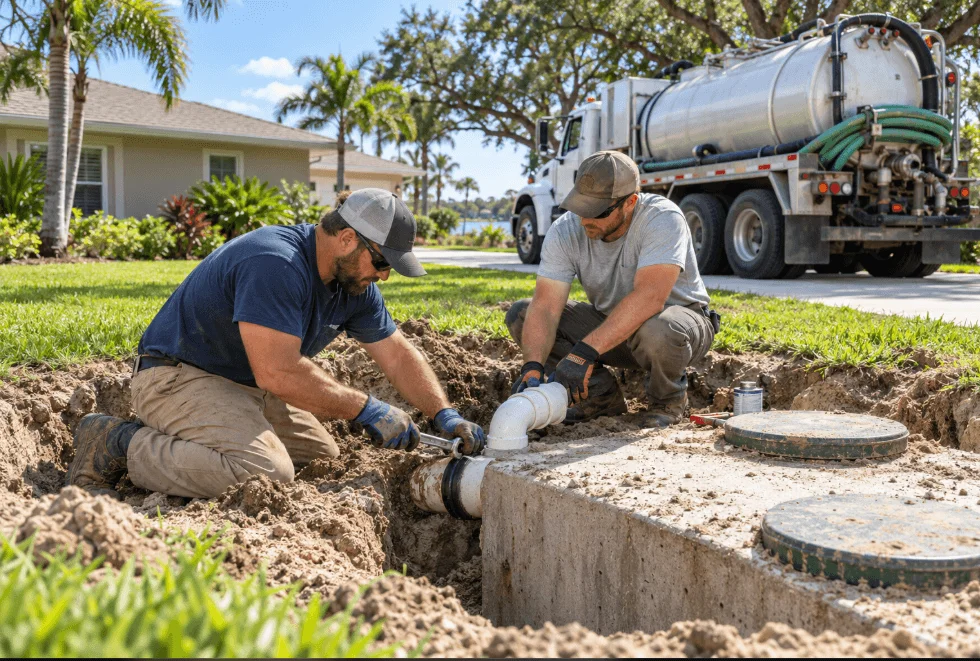
Brevard County listings had a 1,717-sq-ft median in September 2026. This is not an average of every Melbourne home or septic property. Florida compares bedrooms and enclosed building area to set design flow.
Check sewer availability and the exact basin first. Gather the floor plan, signed site plan, legal description and soil data. DOH-Brevard accepts construction applications by email under DEP rules. Obtain the permit before work and arrange inspection before covering it.
What looks like a tank failure can start in the drain field, the plumbing or the way the property uses water.
Delayed pumping or damaged baffles let waste escape.
Leaks and heavy loads can overwhelm treatment.
The wrong materials clog and disrupt the system.
Rain, groundwater and runoff restrict drainage.
Roots, traffic or broken lines interrupt flow.
Added use, failed pumps and aging parts change performance.
Compare septic types, tank sizes and the permit steps in a few clear sections.
About 1,700 sq ft. Realtor.com data published by FRED shows a 1,717-sq-ft median for Brevard County listings in September 2026. It is not a citywide average or a measurement of septic-served homes.
A three-bedroom, two-bath house is an example, not a local average. Florida sizing checks bedrooms and enclosed building area.
| Bedrooms and enclosed area | Design flow | Minimum effective tank |
|---|---|---|
| 2 bedrooms, 751–1,200 sq ft | 200 gpd | 900 gallons |
| 3 bedrooms, 1,201–2,250 sq ft | 300 gpd | 900 gallons |
| 4 bedrooms, 2,251–3,300 sq ft | 400 gpd | 1,050 gallons |
When bedrooms and area do not match, use the criterion that produces the greater flow. Storage gallons differ from gallons per day. Advanced treatment has its own approved ratings; confirm the installed tank from records.
These are relevant existing systems and approved options—not measured local market shares. Basin rules can limit new installations.
| Type | How it works | What to know |
|---|---|---|
| Conventional tank and field | Settles solids, then treats effluent through soil | Site and basin approval control new use |
| Pump-dosed field | A pump moves effluent in controlled batches | Distribution only; not automatically nitrogen-reducing |
| Nitrogen-reducing ATU | Approved aerobic equipment adds treatment | Operating permit, power and maintenance contract |
| Performance-based system | Engineer-designed treatment meets specified targets | Design, monitoring and ongoing service apply |
| In-ground biofilter | Special drainfield layers reduce nitrogen | Site-specific suitability; care differs from an ATU |
| Mounded field | Raises the field above limiting groundwater | A field layout, not a substitute for nitrogen treatment |
A standard aerator does not automatically meet Lagoon nitrogen requirements. Select approved equipment and the right field together.
Check current maps and agency guidance. A Melbourne mailing address alone does not establish which basin or rule applies.
Heavy and rigid. Check seams, lids and shell condition.
Lighter. Proper support and fittings matter.
Lightweight. Approved installation and groundwater precautions matter.
Tank shells, fields and pumps age differently. Condition, installation and maintenance matter more than a single lifespan promise. Keep rainwater away and follow the treatment system’s service plan.
Timing: 4–6 business days is an initial planning allowance, not a county deadline. The August 2026 packet lists a minimum 48-hour utility-location hold when department staff perform the site evaluation. Design, missing documents and review can extend the schedule.
Fee examples: the packet lists $510 for a new system without a submitted site evaluation, or $395 with one. Other fees may apply. Confirm the current total; installation and soil/design costs are separate.
Upgrade assistance: Brevard offers property-specific grant options. Confirm eligibility and obtain program approval before starting work.
Practical answers for Melbourne homes and businesses.
Existing conventional systems, aerobic units and performance-based systems are relevant locally. Approved nitrogen-reducing biofilters are another option where suitable. Check the actual permit record.
A 300-gpd conventional design needs at least 900 gallons of effective tank capacity; 400 gpd needs 1,050. Florida compares bedrooms and floor area; this is not a local average.
Brevard County’s median listed-home size was 1,717 sq ft in September 2026. It does not measure all Melbourne homes or septic properties.
No. Sewer service and Lagoon basin rules can require enhanced treatment or prevent a new septic permit. Verify the parcel before choosing equipment.
DOH-Brevard handles local construction and operating permits under Florida DEP rules. Use its current construction page for applications and inspection requests.
Use 4–6 business days as an initial allowance, not an agency deadline. The county packet includes a minimum 48-hour utility-location hold when staff perform the site evaluation; design and review may take longer.
Tell us where you are, what is happening and the service you need.